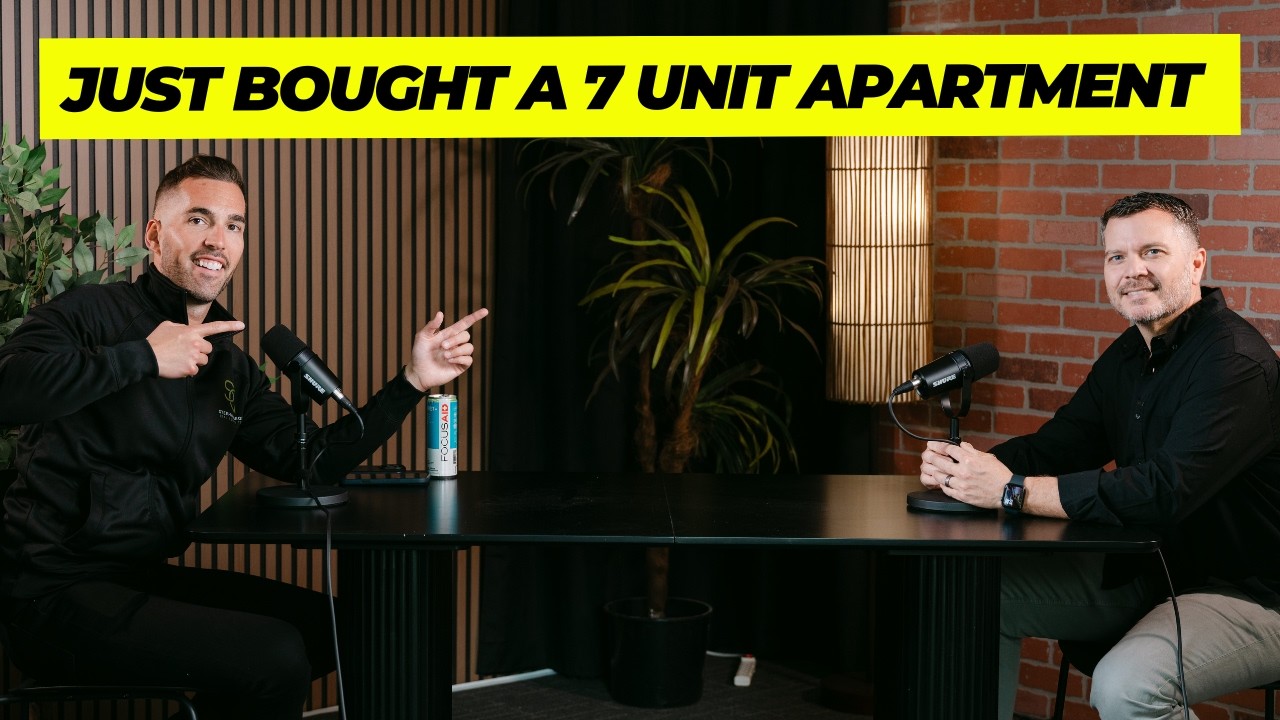
I’ve taken deals all the way to the finish line — money spent, weeks invested — and still had to walk away. It happens. After more than 300 units, I close the vast majority of what I put under contract, but the deals that fall apart almost always die from the same avoidable errors. If you’re getting into small multifamily real estate investing, these are the mistakes that kill deals before closing, and how to sidestep them.
Mistake 1: Treating due diligence and financing as separate steps
This is the big one. New investors think they get to finish walking the property, decide they like it, and then start ordering bank reports. By the time they do, the clock has eaten their deadline.
In multifamily, due diligence and underwriting run at the same time. While you’re walking units and auditing leases, the bank is underwriting and ordering third-party reports — appraisal, environmental, and sometimes a Property Condition Assessment. Run them in sequence and there’s no way you close on time.
The fix: treat the day you go under contract as the day everything starts moving in parallel.
If you want the full sequence laid out step by step, here’s my 7-step process for buying a small multifamily deal.
Mistake 2: Missing your deadlines
Deadlines drive decisions, and delays kill deals.
If you blow your due diligence or financing deadlines, two things happen. Depending on your contract, the seller can move to keep your earnest money deposit. And at the very least, the seller gets annoyed — which makes every remaining negotiation harder.
My standard target is around 60 days, but I’ve been pushed to 45 days, which was brutal, and I’ve had deals run for months. The “I’ll just extend and take my time” mindset is how deals slip away. Stay dialed in.
Mistake 3: Waiting for the seller to hand you documents
Sellers do not volunteer paperwork. Even when the requirement is written into the Purchase and Sale Agreement, they’re busy and they’ll wait for you to ask. You have to actively request the leases, the property tax returns, and updated rent rolls — including details on any delinquency.
The bank wants the same documents. So you’re the hub: requesting, organizing, and routing everything to underwriting while the clock runs. Disorganization here is what causes the missed deadlines in Mistake 2.
Mistake 4: Expecting a pre-approval that doesn’t exist
If you come from single-family, this one surprises you. There is no pre-approval in multifamily.
In single-family, the bank evaluates you up front — credit, income, debt-to-income — and pre-approves a number. In multifamily, the lender issues a term sheet: on a $1,000,000 purchase they might offer a $750,000 loan with $250,000 down. But that term sheet is contingent on a satisfactory appraisal, environmental survey, and underwriting. The loan isn’t actually approved until you receive a commitment letter, which often lands late in the process. Assuming you’re “approved” early is how people get blindsided.
Mistake 5: Getting surprised by immediate repairs
Your lender’s reports can come back with required immediate repairs. On a Fannie Mae deal I did, the lender sent someone out and required repairs I wasn’t planning on, with escrow held back to fund them. You can try to negotiate those costs onto the seller, or you may have to contribute them yourself.
Either way, budget for the possibility. A lender’s repair list can change your cash-to-close.
Mistake 6: Forgetting it costs money before you ever close
Here’s the reality nobody likes. To get a deal to the finish line you’ll spend on inspections, the appraisal, the environmental survey, and legal. By the time the commitment letter arrives, you might be 55 days in and several thousand dollars deep — on a deal that could still fall through.
That’s the cost of doing business in multifamily. If you’re not willing to risk a few thousand dollars to get this far, this isn’t the game for you. And when the audit reveals a problem too big to fix, you have to be willing to walk — even with all that money and time invested. I’ve done it. It stings. It’s also discipline.
I want to be straight about the odds, though: I close the vast majority of what I put under contract. Walking away is the exception, not the norm. But the deals that did not pan out taught me the same lesson every time — the money you spend on inspections, the appraisal, the environmental, and legal is not a deposit on the building, it’s the price of finding out whether the building is what the seller said it was. Treat it as tuition, budget for it before you write the LOI, and a dead deal feels like a lesson instead of a loss.
Mistake 7: Skimming the closing statement
You get the closing statement 24 to 48 hours before close. Read it line by line. It lists your purchase price, rent and security-deposit prorations, and lender fees — a “point” is 1% of the loan, so on a $1,000,000 loan that’s $10,000.
On a deal this size, a single mistake can cost tens or hundreds of thousands of dollars. This is not where you skim.
Mistake 8: Assuming closing day goes the way you picture it
Even the finish line throws curveballs, and treating closing as a formality is its own mistake.
Most closings aren’t joint — you and the seller usually aren’t in the same room, and often not even the same state. I’ve done exactly one joint closing, on our 56-unit. I bought it from two brothers and a sister, genuinely some of the nicest people I’ve dealt with, old-school types who shook hands and brought the keys. And I still asked whether they could be put in a separate room. Not because of them — because at 33, signing on a $5 million deal, I wanted to go through every document with my lender without an audience. I made my lawyer show up. The lesson isn’t “avoid people.” It’s that closing is when you slow down and read, not speed up because you’re excited.
The keys are another one. You’d assume you walk out of closing with them. Not always. I’ve closed recently and stood there thinking, where is everybody, where are the keys? Sometimes you get them at the table, sometimes you don’t, and you have to sort it out on the fly. None of this is a deal-killer — but going in expecting a clean, scripted closing is how small surprises rattle you at the worst moment. Expect friction, and it won’t throw you.
So — is small multifamily worth it?
Yes, if you respect the process. None of this is rocket science, but it is a science: a sequence with real deadlines, real paperwork, and real money at risk before you own anything. The investors who succeed aren’t the ones with the most capital — they’re the ones who stay organized, request what they need, and hit their dates.
Do one small multifamily deal right and it changes your family’s trajectory. The mistakes above are exactly what stands between most people and that first deal.
If you’d rather not navigate the timeline, the documents, and the financing surprises alone, apply for the mentorship — walking clients through this is what I do. Want to see how I read a deal before any of this starts? Here’s how I analyze a property. And grab my book The Small Multifamily BRRRR Method free for subscribers.
Frequently asked questions
What’s the most common mistake first-time multifamily investors make?
Treating due diligence and financing as separate, sequential steps. In multifamily they run in parallel — the bank underwrites and orders reports while you inspect the property. Investors who wait to start the bank process until after due diligence almost always blow their closing deadline and put their earnest money at risk.
Can the seller keep my earnest money deposit?
Depending on your contract, yes — particularly if you miss your due diligence or financing deadlines. That’s why timelines matter so much. Beyond the financial risk, blowing deadlines annoys the seller and makes the rest of the deal harder to negotiate. Staying organized and on schedule protects your deposit.
Why is there no pre-approval in multifamily?
Because the lender evaluates the property, not just you. Instead of a pre-approval, you get a term sheet based on the purchase price and preliminary numbers — but it stays contingent on a satisfactory appraisal, environmental survey, and underwriting. The loan is only truly approved when you receive the commitment letter, usually late in the process.
Is small multifamily investing worth the upfront cost?
It can be, but you’ll spend on inspections, appraisal, environmental, and legal before closing — potentially thousands on a deal that could still fall through. That’s the cost of doing business. If you respect the process, stay organized, and are willing to walk from a bad deal, one solid small multifamily deal can be life-changing.
What should I check on the closing statement?
Everything, line by line. You get it 24 to 48 hours before closing. Confirm the purchase price, rent and security-deposit prorations, and lender fees — a point equals 1% of the loan. On a large deal a single overlooked error can cost tens of thousands of dollars, so read it carefully or have your attorney review it.