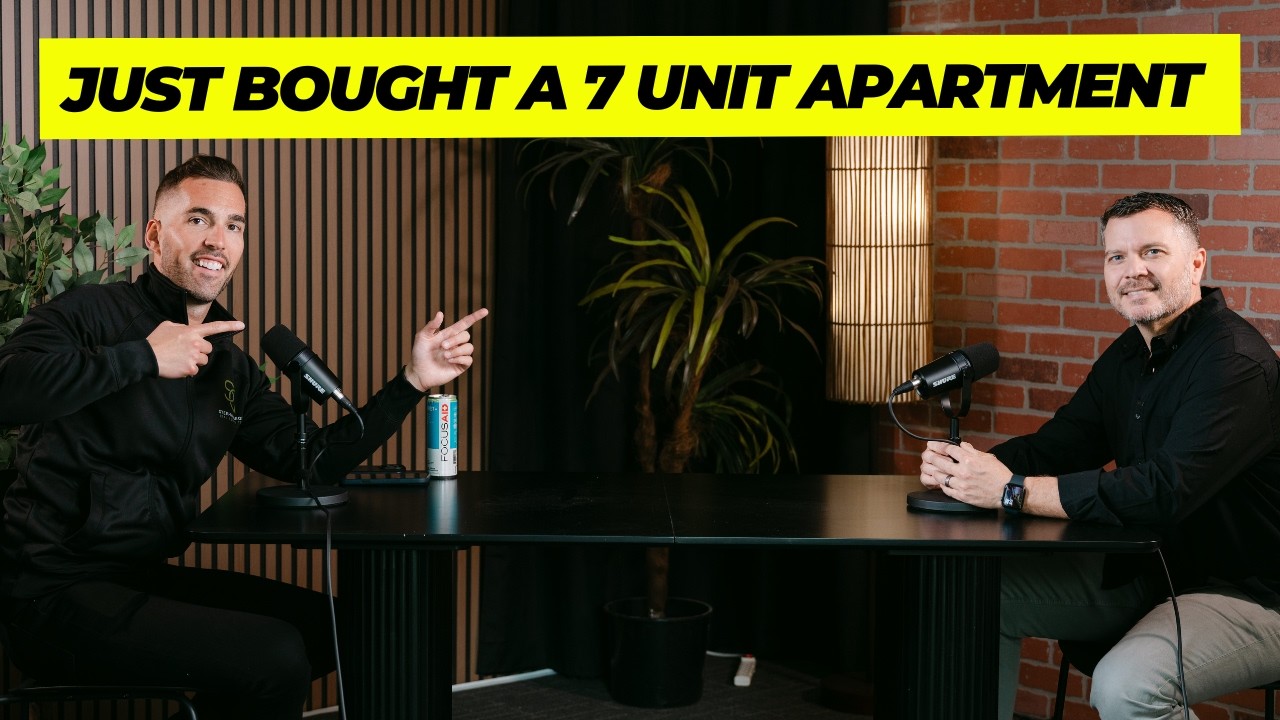
When my wife Andrea and I bought our first apartment building, we didn’t raise a single dollar from anybody. We didn’t even know what syndication was. So if you want to know how to start small multifamily real estate investing, here’s the headline I’d lead with: you start with your own money, you start small, and you keep it simple. This post walks through exactly how I’d begin today, using the same path that took us from one small building to a portfolio we own outright.
I’m not going to sell you a fantasy. This is not a no-money-down game. But if you have real income and real savings, small multifamily is one of the most accessible ways I know to build wealth and actually keep control of it.
What “small multifamily” actually means
When I say small multifamily, I’m talking about the buildings I actually buy: deals priced roughly between $500,000 and $2 million. In unit terms, that’s the seven-, eight-, and twelve-unit range.
The reason I love this size is simple. It’s big enough to cash flow and force value, but small enough that you don’t inherit the headaches of a giant complex. Own a hundred units and you’ve got a parking lot, a pool, and a play place to maintain and reinvest in. Own eight units and you have none of that. Boring is good, and small is where boring lives. Those are deals a regular high-income earner can actually buy with their own money and run themselves — no fund, no outside investors, and nobody’s permission required to make a decision. If you’re still deciding whether this asset class is right for you, start with why small multifamily is the best vehicle for building wealth.
The honest truth: this is not a no-money-down game
The gurus love to say “you don’t need any money, just go raise it from other people.” I disagree. If you don’t have money, don’t play the apartment game.
Here’s who this path is built for:
- A high-income earner — think a couple hundred thousand dollars a year.
- Someone with real liquidity to put into a deal. In our mentorship, the floor is at least $150,000 liquid, ready to go into an apartment.
- Someone willing to actually own and operate the building, not just sit back and collect.
If that’s you, you don’t need a fund, a sponsor, or a single outside investor to get started. You need a down payment, reserves, and the discipline to buy right.
My first deal, by the numbers
I want you to see how small the first step really is. Here’s our first apartment building:
- 7 units
- Purchase price: $660,000
- Down payment: 20%, which was $132,000
- Interest rate: 3.9%, on a 10-year loan
I still have that rate today because of the 10-year term. That deal cash flowed easily, largely because the low fixed rate kept our debt service predictable. We didn’t promise anyone a return, we didn’t answer to anybody, and we owned 100% of it. That’s the entire proof of concept: you do not need to go big or go public to get into the game. One right-sized deal, bought with your own money, can change your trajectory.
Step by step: how I’d start today
- Get your capital and income in order. Strong income plus real liquidity. This is the on-ramp. Without it, the honest move is to wait and stack cash first.
- Buy right. The whole game is buying at the right price in a market you can actually operate in. Run the numbers before you fall in love with a building — I do it with my Multifamily Deal Analyzer.
- Use 10-year fixed-rate debt. Andrea and I always do this. It removes the single biggest risk that has wrecked other investors. More on why below.
- Improve through operations. You don’t need a gut renovation. You force value by running the building like a business.
- Refinance and repeat. Once you’ve improved it, refinance, recycle your capital, and do it again. That’s the small multifamily BRRRR method.
Why fixed-rate debt matters even on your first deal
This is the part beginners skip, and it’s the one that protects you. With 10-year fixed-rate debt, rising interest rates only hurt you if you have to refinance — and with a 10-year term, you don’t have to. Other investors used floating-rate debt, and when rates climbed, their monthly payments could double or triple overnight. You can’t create that much new income out of thin air just to stay even.
Write this down: you only lose in real estate if you run out of money or time. Fixed-rate debt and a long hold are how you make sure you never run out of time. That single decision, made on your very first deal, is what keeps you in the game long enough to win. If you want the mechanics, Investopedia has a clear breakdown of fixed-rate versus adjustable-rate financing.
Operate like an owner: hold your tenant standard
Starting in small multifamily isn’t just about buying — it’s about operating. In 2026 the economy is in a more precarious spot, and it’s taking longer to find good tenants. You can still do it; we’re still doing it. But when a unit comes vacant, you face a choice: lower your standards to fill it fast, or sit and wait for the right tenant.
Andrea and I never lower our standards. We’re fine waiting two or three months for the right person, because the right tenant is like the right customer — take care of them and they’ll take care of you. A weak tenant who can’t pay leads to an eviction, and you lose money in an eviction every single time. As a private owner with safe debt, you have the freedom to wait. That freedom is exactly why starting private and small is so powerful.
Why start with your own money instead of raising it
Going private with your own money isn’t a limitation — it’s the advantage:
- You own 100% and answer to no one.
- You never promise a guaranteed or preferred return you might not be able to pay.
- You keep the full tax benefits — depreciation and the ability to 1031 exchange — that get split away in a syndication.
- You can sit and wait, hold your standards, and make decisions on your own timeline.
A boring business and an exciting life
I always say I want a boring business and an exciting life. Day to day, small multifamily is wonderfully boring, and that’s the point. You’re not speculating on the next meme coin or chasing a get-rich-quick headline. You’re buying a real asset, operating it well, and letting it compound over a decade or more.
If you want help finding, underwriting, analyzing, and operating your first deal, that’s exactly what we do inside our mentorship — for high-income earners with at least $150,000 liquid. You can also grab my book, which breaks down the whole approach.
Frequently Asked Questions
How much money do I need to start small multifamily investing?
Enough for a real down payment and reserves, because this is not a no-money-down strategy. On our first deal we put 20% down, which was $132,000 on a $660,000 building. In our mentorship the floor is $150,000 liquid plus strong income, because you need cash to buy right and operate the building well from day one.
Is small multifamily a good way for beginners to start?
Yes, if you have the capital and you’re willing to operate. Smaller buildings cash flow and let you force value, but they don’t carry the maintenance burden of a large complex. Starting with your own money keeps you in full control and lets you wait for the right deal and the right tenant instead of forcing either one.
What size building counts as small multifamily?
The deals I focus on run roughly $500,000 to $2 million in price, which lands in the seven-, eight-, and twelve-unit range. That’s large enough to cash flow and improve through operations, but small enough that you avoid the pools, parking lots, and amenities that make big complexes expensive to maintain and reinvest in.
Do I need experience to buy my first apartment?
I didn’t even know what syndication was when we bought our first building. What matters more than experience is buying right, using safe fixed-rate debt, and being willing to operate. Those are learnable, which is the entire reason I teach this. Start with your own money on a right-sized deal and you’ll learn fastest by owning.