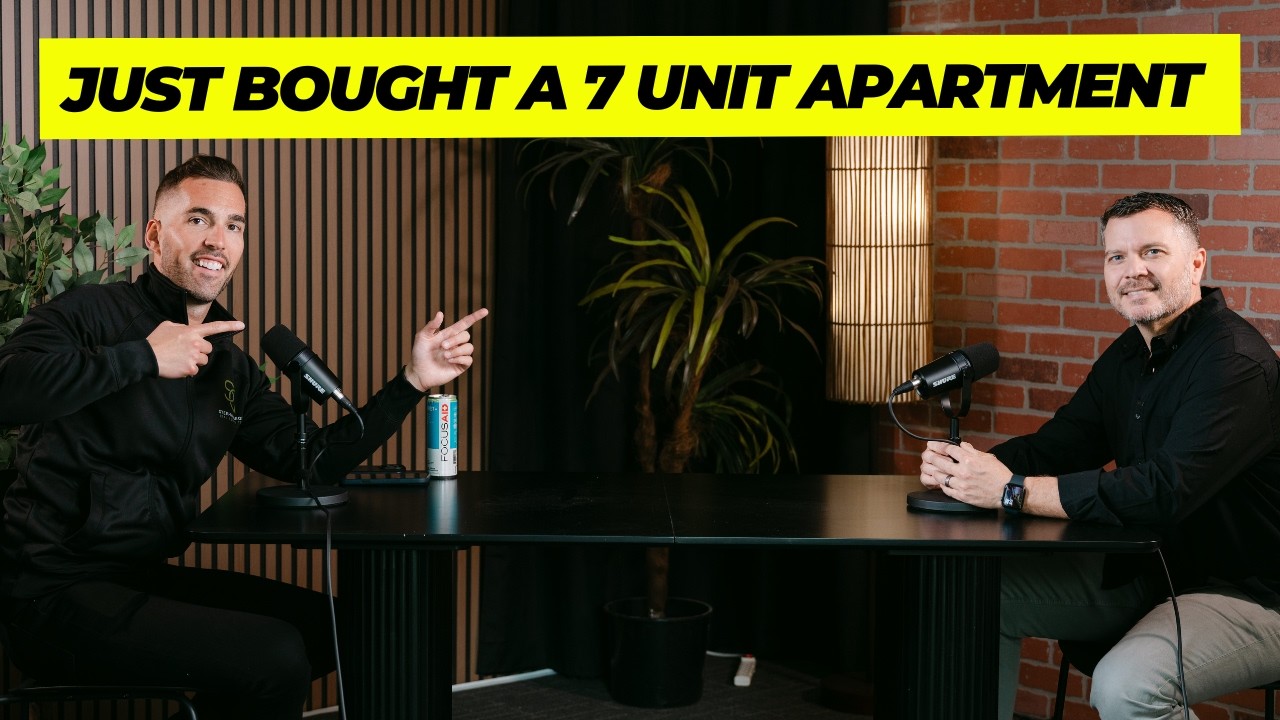
Managing your first small multifamily property is where the real work, and the real money, actually begins. Anyone can drop numbers into a spreadsheet and make a deal look good on paper. But the day you close, the spreadsheet stops mattering and operations take over. I recently spent an in-person coaching day with two of my clients, Ryan and Emily Downey, a husband-and-wife team from Bowling Green, Kentucky, who closed on their first seven-unit apartment a few months after joining our program. They both still work W-2 jobs. They are not full-time entrepreneurs. And they are proof that ordinary high earners can buy and run a small multifamily deal, as long as they treat the operations as seriously as the underwriting.
The deal is closed. The real work starts now.
I say this constantly, and I will keep saying it: the money in multifamily real estate is made in the management and the operations, not in the purchase. Underwriting a deal in a deal analyzer is the easy part. Turning those projections into real-world performance is the part that separates investors who scale from investors who stall. When the Downeys flew in for their coaching day, the goal was not to re-run the math on their seven-unit. It was to teach them how to actually operate it.
What a realistic first deal looks like
The Downeys did not start with a 50-unit. They started with a seven-unit while keeping their day jobs. That is the accessible entry point I push for most high-income earners: a small multifamily building, roughly six to fifty units, that is large enough to force value but small enough to learn on. Your first deal is your training ground. As I told Ryan, if you can keep the books dialed in on a seven-unit, you can do it on a seventy-unit. The systems are the same. The discipline is the same. Only the scale changes.
Your first job after closing: fill the vacancy and turn the unit
When I sat down with the Downeys, they had a vacant unit they were about to fill and had just completed their first unit turn with a light rehab. They used contractors we had already vetted and provided, which is one of the most underrated advantages of having a team: they did not have to gamble on a stranger to do the work.
Filling vacancy and turning units well is the foundation of small multifamily operations. Every day a unit sits empty is income you never get back, and every dollar you waste on an unnecessary turn comes straight out of your return. So the goal is simple: turn units quickly, turn them correctly, and do not overspend doing it.
Do not over-improve a unit turn
One of the biggest beginner mistakes is treating every turn like a gut renovation. A lot of new owners automatically repaint and automatically replace the carpet on every single turn. Most of the time, that is wasted money. On many units, there are no marks on the walls and the flooring is fine, so the unit just needs a thorough clean, which might run around $200. If the tub looks rough, you often do not replace it; you glaze it (either the whole tub or just the bottom) and recaulk. The skill is knowing the difference between a unit that needs work and a unit that just needs to be cleaned.
Understand the money: NOI in plain English
You do not need to be a finance expert to run your first deal, but you do need to understand how the building makes money. Your gross rental income, minus your operating expenses (taxes, utilities, cleaning, leasing, and repairs and maintenance), gives you your net operating income, or NOI. On a small building that is dialed in, those operating expenses should run roughly 30 percent of income, maybe up to 35 percent. For a deeper definition, this overview of net operating income is a solid starting point.
One thing that surprises new investors: your first year is often close to break-even. That is usually by design. In year one you are spending on capital items like unit turns and improvements specifically to push NOI up over time. I break down exactly how that math works, and how forcing NOI drives your eventual cash-out refinance, in the deal-math companion to this post: how to increase NOI on a multifamily property.
Build systems from day one, because you cannot scale chaos
The reason the Downeys can run a building in Kentucky while holding W-2 jobs is systems, not constant hands-on labor. My wife Andrea, who handles a lot of our operations, does not walk units anymore. We do not need to physically be there, because the process does the work.
- A make-ready checklist. Whoever does your maintenance confirms every item works (dishwasher, microwave, stove, fridge, outlets) and turns the checklist back in to you.
- Photo and video proof. When you have multiple locations or you are remote, your team sends a video and photos so you can verify the unit is truly move-in ready without standing in it.
- Payment rules in writing. Set fixed payout dates. Make it clear nobody gets paid until the checklist comes back. This single habit kills the late-night invoices and the constant follow-up calls.
How you do it from the beginning is how you will scale it. Set up sloppy processes on a seven-unit and you will drown when you add the next deal. Set them up cleanly now and the building runs itself.
What this video did not cover: buying the deal
To be straight with you: this was an operations day, not an acquisition lesson. The Downeys had already found, analyzed, and closed their deal before any of this. If you are at the earlier stage and still trying to buy your first building, that is a different process. I walk through it step by step in my free 5-step framework for buying your first small multifamily deal, which also gives you the same Deal Analyzer I use to underwrite. And if you want to sidestep the operational mistakes before you even close, read the small multifamily mistakes that kill returns.
The fastest path is having a guide
The Downeys did not figure all of this out alone. They made an investment in coaching and mentorship, then closed and learned to operate with us in their corner. If you want that same hand-in-hand path, from finding and analyzing a deal through due diligence and into real-world operations, that is exactly what our one-on-one coaching program does. You can also start by running your own numbers with the Multifamily Deal Analyzer.
This article is educational and reflects one video plus my own experience. It is not financial, investment, legal, or tax advice. Verify any numbers and assumptions for your own situation before acting.
Frequently Asked Questions
How do I manage my first small multifamily property if I have a W-2 job?
You manage it with systems, not constant hands-on work. Build a make-ready checklist, set fixed payment dates for contractors, and require photo and video proof before anyone gets paid. The W-2 couple in this video runs a 7-unit remotely using this approach. Done right from the start, you can operate the deal without leaving your job.
What should I do first after closing on a small multifamily deal?
Fill any vacant units and complete your first unit turn. Keep the turn light: clean the unit, glaze the tub if needed, recaulk, and only paint or replace flooring when it is actually warranted. Then set up your management systems so the property runs the same way every time, even when you are not on site.
How much should I spend on a unit turn?
Less than most beginners think. A basic clean can run around 200 dollars, and many units only need a thorough cleaning, fresh caulk, and tub glazing rather than new carpet or a full repaint. Avoid the habit of automatically painting and re-carpeting every turn, because that spending comes straight out of your returns.
Can beginners realistically buy a 7-unit as their first deal?
Yes. The investors in this video are W-2 workers, not full-time entrepreneurs, and a 7-unit was their first multifamily purchase. The key is buying right, then learning to manage and operate the deal. Acquisition is only the start; the operations after closing are what turn spreadsheet numbers into real-world performance.