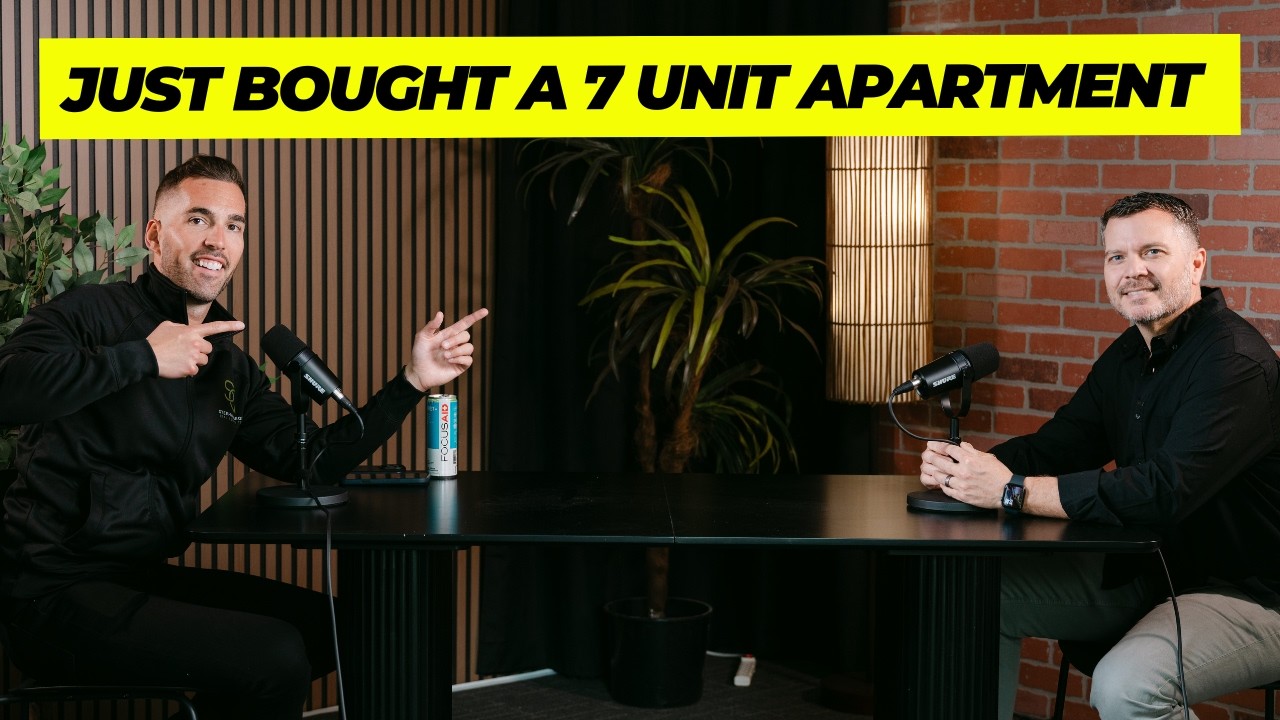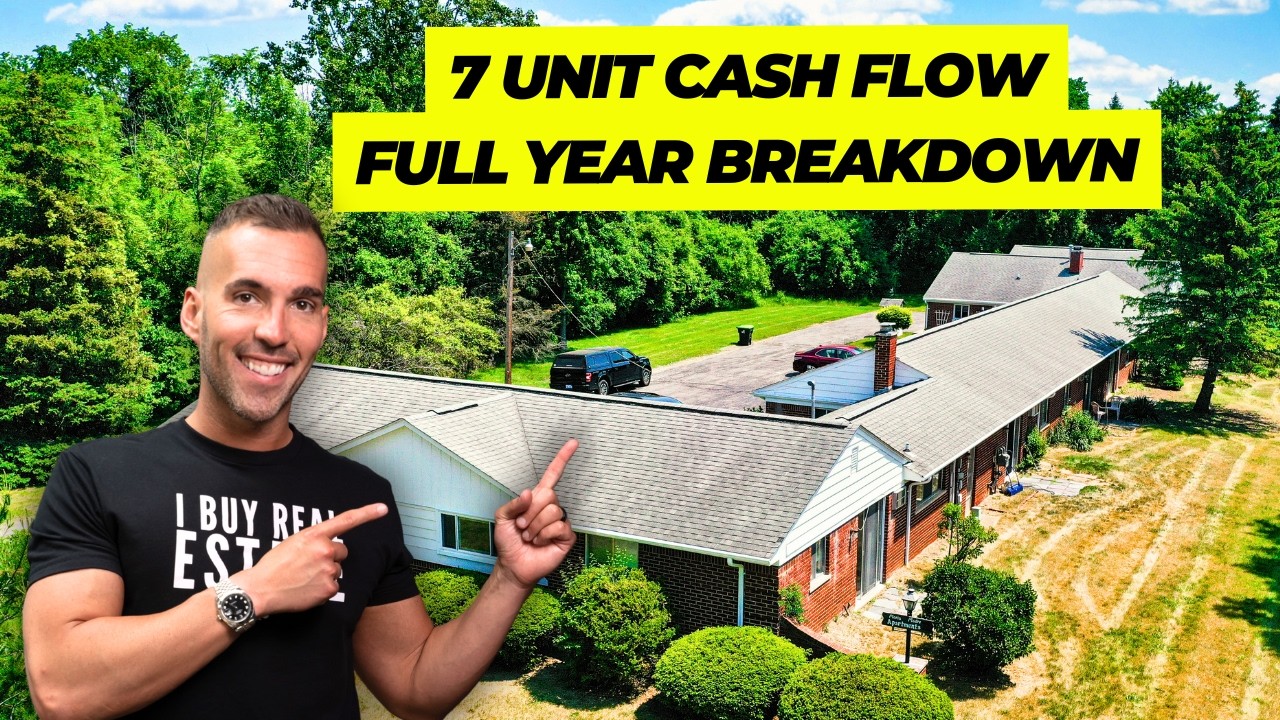
Small multifamily real estate investing is the most realistic way I know for a busy high-income earner to build serious wealth without quitting their job. Six years ago, Andrea and I bought our first deal — a 7-unit apartment — with our own money and no investors. That single building is the entire reason I tell beginners to start exactly here instead of chasing a 200-unit syndication on day one. In this post I’ll show you what that first deal actually looks like behind the scenes, what it takes to get in, and why “start small” is advice I live by, not just preach.
I’m not going to sell you a no-money-down fantasy or a get-rich-quick story. I’m going to give it to you straight, the same way I broke down the real profit and loss on this property in the video above.
Why I tell beginners to start small
When you’re new, the goal isn’t to look impressive on the internet. It’s to learn the game on a property you can actually control and afford. Small multifamily lets you do exactly that.
Andrea and I own this 7-unit outright. No syndication, no outside investors, no partners writing checks and reading reports. We buy it, we improve it, we operate it, we own it. That hands-on control is the whole point when you’re starting out, because every lesson you learn on a small building is a lesson you repeat on a bigger one later.
Write this down: don’t quit your job to go live off apartment buildings. If you’re pulling $300,000 or $400,000 a year, your income is the engine. Real estate is the investment. Let the buildings produce cash flow, equity, and tax benefits in the background while you keep doing what you’re already good at.
What “small multifamily” actually means
When I say small multifamily, I’m talking about the buildings most beginners can realistically buy and operate themselves. My first deal was 7 units. My portfolio today includes a 56-unit building that produces around $800,000 in annual revenue. The skills are the same — the only difference is scale. That’s exactly why I tell people to start small, use their own money, and trade up.
My first deal, by the numbers
Here’s what I actually paid, because most people online won’t show you this:
- Purchase price: $660,000
- Down payment: $132,000
- Units: 7
- Market: Northville, Michigan — a strong area where the neighbors live in multimillion-dollar homes
When we bought it, units rented for around $700. As tenants moved out, we made light improvements and pushed rents to roughly $1,100, and today they’re closer to $1,200. Nothing exotic. No gut renovations. Just buying right and improving as units turned over. If you want the full loop behind that, read my BRRRR strategy breakdown for small multifamily deals.
What it really takes to get started
This is not a no-money-down game — I don’t do those. Here’s the honest entry bar:
- Real capital. On my first deal I put $132,000 down. To play this the way I teach it, you generally want a couple hundred thousand dollars ready to go. This is built for high earners, not for someone starting with nothing.
- A job you keep. Your income qualifies you for financing and protects you when something breaks — and things will break.
- Discipline. Live below your means, save aggressively, and recycle capital back into deals instead of spending the upside.
If you want help mapping your own first deal to your income and savings, that’s exactly what we do together inside the multifamily mentorship program.
The one-year P&L, so you know what you’re signing up for
This is the part beginners almost never get to see before they buy. Here’s the real 2025 calendar-year profit and loss on this 7-unit, rounded for readability:
- Gross income: $115,487.93
- Total operating expenses (including mortgage): $94,588.60
- Capital expenditures (CapEx): $7,723
- Net cash flow: $13,176 for the year
Gross rent was about $100,019 of that income. The other roughly $15,000 came from sources beyond rent — and that’s a lesson I want you to internalize early: rent is not your only income.
The expenses are real and itemized too: insurance, landscaping, property taxes, utilities, repairs, inspections, pest control, plumbing, snow removal, and yes, a couple of “miscellaneous” line items I honestly can’t fully account for. That’s ownership. Budget for the boring stuff, because it adds up fast on a small building.
Start small, use your own money, scale up
That $13,176 might not sound life-changing, and that’s fine. On your first deal you’re buying an education, an asset that pays down its own loan, a property that appreciates, and a tax shelter all at once. The cash flow is the smallest part of the return when you do this right.
Start with one small building you can afford and control. Learn how to run it. Then use what it produces to step up to the next one. When you’re ready to see the full mechanics of recycling your capital, read about our cash-out refinances.
Ready to plan your first deal?
If you’re a high earner who’s tired of the tax bill and ready to put capital to work without quitting your job, this strategy is built for you. The cleanest first move is to stop guessing and start underwriting real properties — download my Multifamily Deal Analyzer and run the numbers on a deal. If you want me in your corner, apply for the mentorship and we’ll map your first deal together.
For foundational definitions as you prepare, here’s a plain explainer on net operating income, and the SBA’s overview of commercial lending basics.
Frequently Asked Questions
How much money do I need to start in small multifamily real estate?
In my experience you generally need a couple hundred thousand dollars of investable capital. On my first 7-unit I put $132,000 down on a $660,000 purchase. This strategy is built for high-income earners with real savings, not for no-money-down beginners, so plan to bring meaningful capital to your first deal rather than hoping to start with nothing.
Do I have to quit my job to invest in apartments?
No, and I strongly advise against it. I treat small multifamily as an investment that runs alongside strong income, not a replacement for it. Your job qualifies you for financing and protects you when expenses hit. Let the buildings produce cash flow and equity in the background while you keep earning at what you’re already good at.
Is a 7-unit building a good first deal?
It was a great first deal for me. A small building is large enough to teach you real operations and ancillary income, but small enough that you can buy it with your own money and control it directly. You learn the same skills you’ll later use on much larger properties, which is exactly why I recommend starting here.
Do I need investors or a syndication to buy multifamily?
Not for small deals. Andrea and I own our properties outright with no investors and no syndication. Keeping it in-house means you control the asset, the improvements, and all of the upside. That hands-on ownership is precisely why I recommend small multifamily for beginners over passive stakes in someone else’s syndication.