Small multifamily real estate investing is how my wife and I built a seven-figure asset without raising a single dollar from outside investors. No syndication. No fund. No partners I had to answer to. Just the two of us, buying buildings, running them well, and trading up over time. If you are sitting on a duplex or a couple of small rentals and wondering how regular people make the jump to a 56-unit apartment, this is the path I actually walked. By the end of this post you will understand how small multifamily works, why it is more accessible than people think, and the realistic steps to get in.
What “small multifamily” actually means
When I say small multifamily, I am talking about apartment buildings that are still operable by a husband-and-wife team or a small operator, roughly 6 to 50 units.
This is the sweet spot most people skip. They either stay too small with single-family rentals and duplexes, or they try to leap straight into a 200-unit syndication with other people’s money. Small multifamily sits right in the middle: big enough to produce real income and real value, small enough that you can own and operate it yourself.
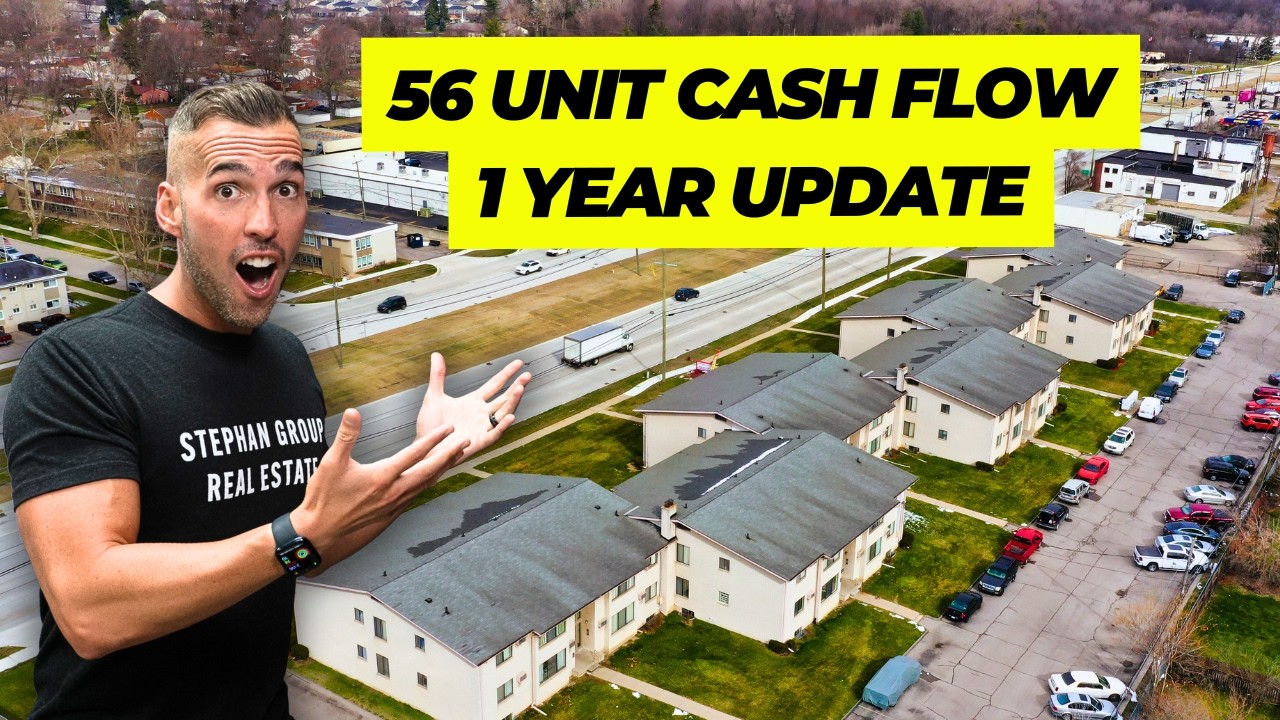
The deal I talk about most is a 56-unit building I bought in 2023 for $5 million. I was 33 years old. That was scary. But it is one of the best deals I have ever done, and over the trailing 12 months it produced $799,844.82 in income. A duplex will never do that.
Why a husband-and-wife team beats waiting for investors
Everyone thinks they need investors. They think they need a syndication, a fund, a network of rich people. You do not.
My wife and I bought a $5 million apartment as a two-person team. No investors. That matters for a few reasons:
- You keep all the upside. When we forced the value up and refinanced, the equity came back to us, not to a list of limited partners.
- You make every decision. Management and operations are where the money is made, and I do not have to get sign-off from anyone to run my building the right way.
- You are not on the hook to other people. Raising money creates obligations and pressure. Owning it yourself keeps it simple.
I am not saying syndication is bad. I am saying you probably do not need it to start, and starting without it forces you to learn the business.
The 1031 ladder: how I traded up into 56 units
I did not start with a 56-unit building. I climbed to it.
To get to this deal, I 1031 exchanged out of a stack of smaller properties: a handful of two-units and a four-unit. The 1031 exchange let me roll my gains forward, tax-deferred, into a bigger asset instead of cashing out and paying tax along the way.
This is where I see people get stuck. They reach out to me all the time saying they have a few duplexes and a fourplex and they “love them” and cannot let go. I get it, but those small properties will never produce what a small apartment building can. You have to be willing to trade up.
The ladder looks like this:
- Start where you can. Get in with what you can afford, even if it is small.
- Operate it well and build equity. Force the value up so you have something to trade.
- 1031 exchange into something bigger. Roll the gains forward, tax-deferred.
- Repeat until you own a real asset.
I did this exact thing. I did not raise a fund or wait for the perfect deal. I bought what I could, ran it well, and used the 1031 exchange to trade a stack of small units into one 56-unit building. The smaller properties were the rungs, not the destination. The moment you start treating them as rungs instead of trophies, the math starts working for you instead of against you.
Learn the IRS rules before you attempt one: how a 1031 exchange works. [external link: confirm/replace target → IRS Like-Kind Exchanges (Section 1031)]
Why bigger gets easier, not harder
Beginners assume a 56-unit is 28 times harder than a duplex. It is not. Once you own a portfolio, scale works in your favor. I run 300-plus units, so I can spread costs across buildings instead of crushing one small property with them. My maintenance technician earns about $60,000 a year and my property manager about $85,000 a year, but my 56-unit only pays a share of each: roughly $19,004 toward the technician and $45,000 toward the manager. A duplex can never split a salary like that. As you climb, fixed costs get diluted, services like landscaping and snow eventually move in-house, and every deal becomes more efficient than the last. That is the quiet advantage of going bigger that nobody tells beginners about.
What it actually takes to get in
I want to be straight with you, because I do not teach a no-money-down game. This is not a hard-money, “I have no money” path.
To do a deal at this level, you need real capital ready to invest. In my world, that means a couple hundred grand on hand, and ideally you are a high-income earner who is looking to put money to work. That is the honest entry point for this kind of small multifamily deal.
If that is not you yet, that is fine. Start smaller, save, and build toward it. The 1031 ladder exists precisely so you do not have to start with a $5 million building.
Run the numbers before you buy [internal link: anchor “run the numbers before you buy” → Deal Analyzer tool]
The mindset shift: you are buying a business
Here is the part beginners miss. A small multifamily property is not a passive rental. It is a business.
When I bought my 56-unit, the previous owner was making about $450,000 a year in gross income and leaving money everywhere. I did not do heavy construction to change that. I came in, managed it, and operated it better. Within 12 months it was generating nearly $800,000 in income, and the building appraised for $7.1 million in 2026, up from the $5 million I paid.
That is the whole game: buy a building, run it like a business, and let the operations create the wealth. Soon this single asset will produce over a million dollars in revenue a year. Most small businesses never hit a million in revenue and fail within a few years. I did not build this from scratch. I bought it and ran it better.
How did I nearly double the income without rebuilding the place? Three levers, not one. I raised rents, yes, but I also added other income streams the prior owner ignored and put a RUBS program in place, ratio utility billing that bills utilities back to residents instead of eating the cost. If you think small multifamily real estate investing is just raising rent, you are leaving about half the upside on the table. The owner before me was sitting on all of it. That is the opportunity hiding in plenty of small apartment buildings right now.
Your first move
If you are serious about small multifamily real estate investing, do not try to skip steps and you do not need to wait for investors to show up. Get clear on your capital, learn how to underwrite a deal, and start climbing the ladder.
I wrote a whole playbook on this, The Small Multifamily BRRRR Method. It is $20 on Amazon and free as a digital download. Get the free book [internal link: anchor “get the free book” → The Small Multifamily BRRRR Method page]
And if you want help buying your first real deal, that is exactly what we do one-on-one in our mentorship. Apply to work with me [internal link: anchor “apply to work with me” → Mentorship application]
Start where you can. Trade up. Operate well. That is how a husband-and-wife team ends up owning a seven-figure asset.
Frequently asked questions
What is small multifamily real estate investing?
Small multifamily real estate investing means buying apartment buildings, typically in the range a single operator can manage, rather than single-family homes or large syndicated complexes. My 56-unit building is a good example. You own the asset directly, run it like a business, and grow your income by raising rents, adding revenue, and controlling expenses, all without needing outside investors to get started.
Do I need investors to buy an apartment building?
No. My wife and I bought a $5 million, 56-unit apartment with no investors and no syndication, just the two of us. Buying it yourself keeps all the upside, lets you make every decision, and forces you to learn the operations. Syndication can work later, but most people can start in small multifamily without raising any outside money at all.
How does a 1031 exchange help in multifamily?
A 1031 exchange lets you roll gains from one property into a bigger one, tax-deferred, instead of cashing out and paying tax. I used it to trade a few two-units and a fourplex into my 56-unit building. It is the mechanism that lets you climb from small rentals into a real apartment asset without losing momentum to taxes along the way.
How much money do I need to start in small multifamily?
For a deal at the level I do, you realistically need a couple hundred grand of capital ready to invest, ideally as a high-income earner. I do not teach no-money-down. If you are not there yet, start smaller and use the 1031 ladder to trade up over time toward a larger small multifamily building.